


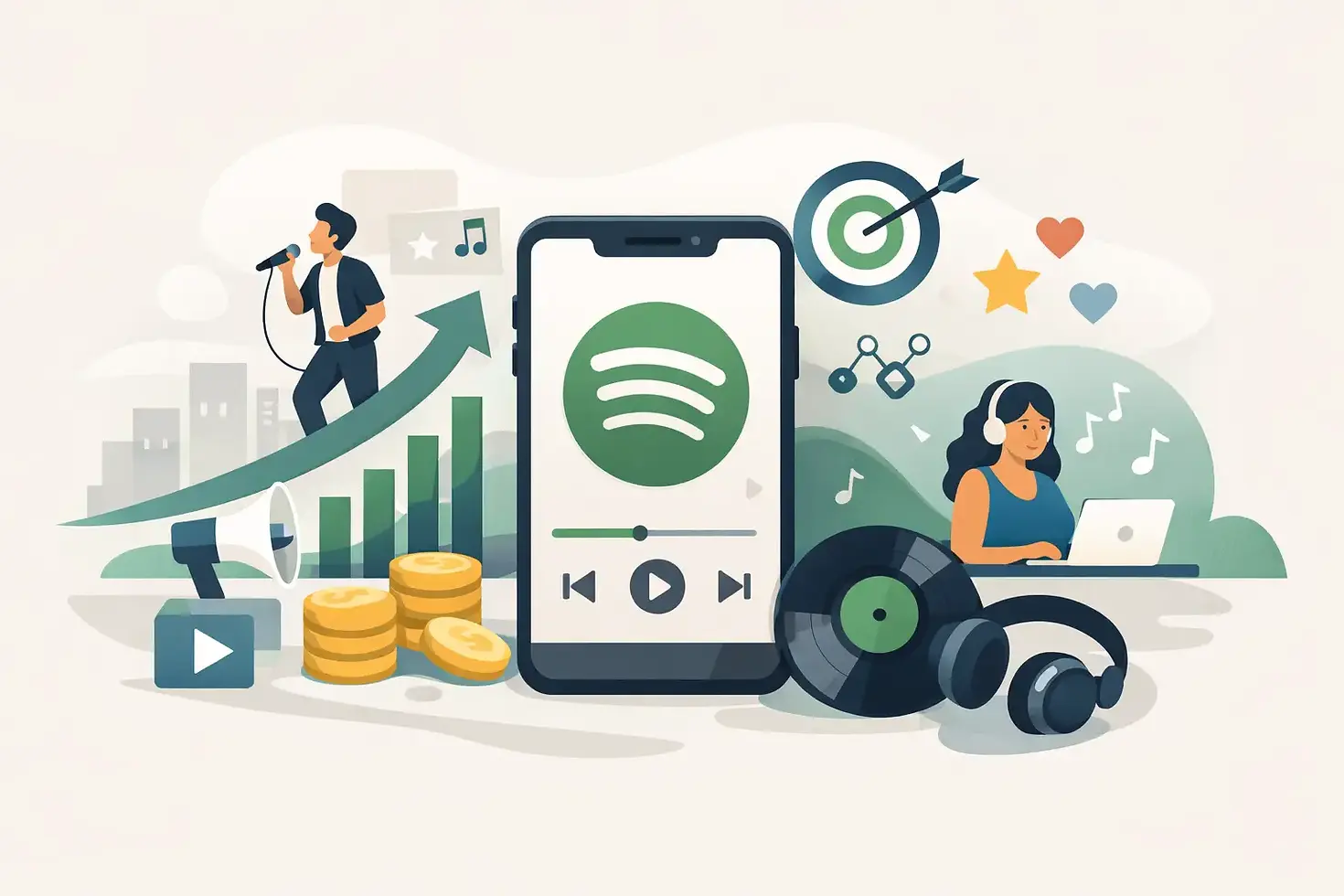
Best Music Promotion for Spotify That Works

A lot of artists think Spotify promotion starts when the song drops. That is usually why the release stalls by day three. The best music promotion for Spotify starts before launch, keeps pressure on after release, and focuses on the signals Spotify actually reads - saves, repeat listens, playlist adds, shares, and completion rate.
If you are an independent artist, you do not need fake hype. You need movement that turns into data. Spotify is not just a streaming app. It is a behavior engine. If people click, save, replay, and stay engaged, your record gets a better shot at reaching algorithmic playlists, radio features, and new listeners who never heard your name before. That is the game.
What the best music promotion for Spotify really means
The phrase sounds simple, but a lot of artists still get it wrong. The best music promotion for Spotify is not buying random plays. It is not paying for a bot-heavy playlist with no real listeners. It is not dropping a link once on Instagram and hoping the algorithm shows love.
Real Spotify promotion builds demand around the song and sends qualified listeners to it. Qualified means people who actually like your sound, listen long enough to matter, and may come back for the next release. That is what creates momentum.
You want promotion that does three things at once. It should bring attention, create engagement, and strengthen your artist profile. If one of those pieces is missing, the campaign can look busy but still fail.
Spotify rewards listener behavior, not empty traffic
Spotify does not care how hard you worked on the record. It responds to what listeners do after they hit play. That is why weak promotion often burns budget. You can send 5,000 people to a song, but if they skip in ten seconds, you are feeding the wrong signal.
Strong promotion is about fit. If your music is melodic trap, underground drill, R&B, pop rap, or alternative soul, the campaign has to target the audience that lives in that lane. Broad traffic sounds exciting, but niche traffic wins more often because the listener is already close to saying yes.
That is also why your release assets matter. Your cover art, song title, snippet choice, artist bio, and social content all shape whether somebody takes the stream seriously. Promotion gets them to the door. Branding gets them to stay.
The channels that actually move Spotify growth
There is no single magic button. The best campaigns stack multiple lanes so your song shows up more than once and in more than one place. Repetition matters.
Playlist pitching can work, but only if it is targeted
Independent artists chase playlists for a reason. A good placement can put your song in front of active listeners fast. But not every playlist is worth the price or the effort. Some have inflated follower counts, weak engagement, or listeners who never convert into long-term fans.
The better move is targeted playlist promotion focused on genre match and real activity. A smaller playlist with engaged listeners can outperform a giant list full of dead weight. Look for fit over vanity. If your track lands in front of the wrong crowd, the skip rate will show it.
Editorial playlists are valuable, but they are not the whole plan. Most independent artists will get more traction from a mix of user-curated playlists, algorithmic lifts, and outside traffic sources that train Spotify to notice the record.
Short-form content drives first touch
TikTok, Instagram Reels, and YouTube Shorts are not optional anymore if you want reach without label money. These platforms create the first impression that sends people to Spotify. The trick is not posting random clips. It is choosing a moment in the song that triggers curiosity fast.
Hooks, beat switches, quotable bars, emotional lines, and visual moments tend to move best. You do not need a movie-budget video. You need consistency and a clear angle. One song can generate performance clips, behind-the-scenes edits, fan reactions, studio previews, and lifestyle content without feeling repetitive.
If the short-form content is strong, Spotify becomes the destination instead of the starting point.
Music blogs, artist platforms, and entertainment networks still matter
A lot of artists ignore platform-based promotion because it is not as flashy as social media. That is a mistake. Feature placements, artist submissions, mixtape visibility, music discovery pages, and entertainment communities can still send motivated listeners your way, especially when those spaces already attract people looking for new talent.
This is where a platform like SignTheArtist fits naturally for independent artists who need more than one look. Exposure inside a music and entertainment ecosystem can help your release live beyond your own page and reach curators, fans, promoters, and industry watchers at the same time.
Email and text lists are underrated
If you have any audience at all, use it directly. A small list of real supporters can outperform a big page with weak engagement. When you send a release to fans who already care, you improve the chance of saves, repeat streams, and shares in the first 24 to 72 hours.
That early activity matters. Spotify pays attention when a song gets immediate engagement from listeners who seem genuinely interested.
Paid ads can be the best music promotion for Spotify - if the funnel makes sense
A lot of artists run ads straight to Spotify and wonder why the campaign feels flat. The problem is not always the ad spend. The problem is the funnel.
Cold audiences usually need a reason to care before they leave a platform. Sometimes the best move is running video ads that warm people up with a strong song snippet, then retargeting the people who watched, clicked, or engaged. Those listeners are more likely to stream with intent.
Direct-to-Spotify ads can work when the record is already connecting and the creative is sharp. But if the artist branding is unclear or the song takes too long to hit, paid traffic will expose that quickly.
This is the trade-off. Ads can speed things up, but they also punish weak positioning. If your budget is limited, spend more time testing creative and audience targeting before scaling.
What to avoid if you want long-term results
Not all promotion is good promotion. Some services promise huge stream counts, overnight playlisting, or guaranteed viral growth. That sounds tempting when you want fast results, but bad traffic can damage the release.
Avoid fake streams, botted playlists, click farms, and mystery packages with no transparency. If a service cannot explain where the traffic comes from, how the listeners are targeted, or what success should realistically look like, move carefully.
Also avoid promoting a song that is not ready. That is the part artists hate hearing, but it matters. If the mix is weak, the intro drags, the artwork looks rushed, or your artist pages are half-finished, promotion will not fix the foundation. It just puts more eyes on the problem.
Build a release plan, not a one-day push
Spotify growth usually comes from momentum, not a single spike. You want a campaign that starts early, peaks around release, and keeps moving after launch.
Two to three weeks before release, start teasing the record with clips and pre-release content. In release week, push your strongest content, activate your audience, and send traffic from every channel that fits your brand. Then keep feeding the song with new angles for the next few weeks instead of disappearing after day one.
That post-release stretch is where many artists lose momentum. They get one decent response, stop posting, and move on too fast. Keep working the record. New listeners are discovering you on different days, not all at once.
How to tell if your Spotify promotion is actually working
Do not judge success by streams alone. Streams are visible, but they do not tell the whole story. Look at saves, listeners versus streams, playlist adds, profile visits, follower growth, and whether people come back to your catalog.
If streams rise but saves stay low, the traffic may not be connecting. If streams are modest but saves and profile visits are strong, that campaign may be healthier than it looks. You are trying to build fan behavior, not just inflate numbers.
Pay attention to where your listeners come from too. If one content format, playlist type, or promo source is sending better traffic, double down there. The best music promotion for Spotify is rarely about doing everything. It is about finding what your audience responds to and pressing harder in that lane.
The smartest play for independent artists
If you are serious about Spotify growth, stop chasing random exposure and start building intentional motion. Choose promotion that matches your genre, reaches real listeners, and supports your artist brand across more than one channel. Let the song work, but give it a real runway.
Every release teaches you something. Learn from the numbers, tighten the rollout, and keep showing up. One good song can open the door, but consistent promotion is what makes people remember your name.


Comments