


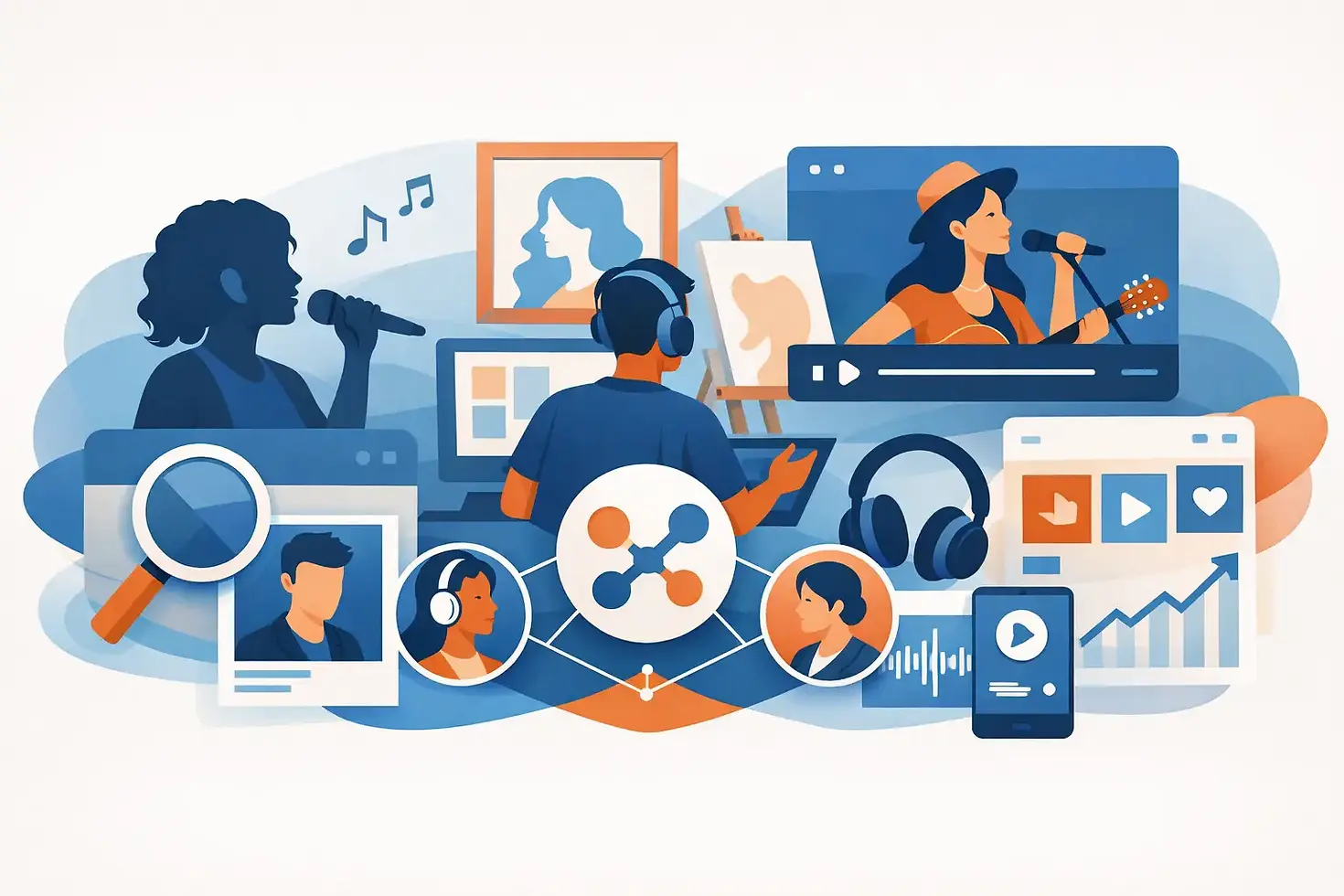
8 Best Platforms for Artist Discovery

Getting heard is not the same as getting discovered. A lot of artists post everywhere, drop links all day, and still miss real traction. The best platforms for artist discovery do more than host your music - they put you in front of listeners, curators, promoters, media outlets, and people who can actually move your career forward.
That distinction matters. If a platform gives you plays but no visibility outside your own circle, it may help your ego more than your next move. If a platform helps you get featured, placed in front of tastemakers, or seen by people looking for talent, that is where discovery starts to turn into opportunity.
What makes the best platforms for artist discovery?
Artists usually ask the wrong first question. They ask, “Where should I upload?” when the better question is, “Where are people actively looking for new talent?” Those are not always the same places.
The best platforms for artist discovery usually do one or more of these things well: they surface new artists through algorithms, they attract industry gatekeepers, they support niche scenes, or they create promotional tools that extend beyond a simple upload. Some are better for fan-building. Some are better for networking. Some are better for making noise around a release week. You need to know which game you are playing.
If you are an independent artist, you also need to think about control. A huge platform can give you reach but bury you in competition. A smaller platform can give you less traffic but more direct exposure. That trade-off shows up everywhere.
1. Spotify
Spotify is still one of the first places artists think about, and for good reason. Discovery on Spotify happens through editorial playlists, algorithmic playlists, release radar, radio features, and user-made playlists. If your song starts getting saves, repeat listens, and low skip rates, the platform can keep feeding it outward.
The upside is scale. A track can move fast if the data is strong. The downside is that Spotify rarely rewards weak packaging. If your cover art looks rushed, your profile is empty, and your release strategy starts and ends with “link in bio,” you are probably not giving the song a fair shot.
Spotify works best when you already have a rollout plan. It is not magic on its own. It is a multiplier.
2. YouTube
YouTube is one of the strongest discovery engines in music because it combines search, recommendation, long-form content, Shorts, and visual branding in one place. A lot of artists overlook how powerful that is.
A listener might find your official video, then watch a live session, then a behind-the-scenes clip, then a short performance teaser. That journey builds connection faster than an audio-only platform. For artists with personality, style, and a clear visual lane, YouTube can create momentum that spreads beyond one song.
The challenge is consistency. If your channel looks abandoned or your content quality jumps all over the place, discovery can stall. You do not need a major-budget video every month, but you do need a real content rhythm.
3. TikTok
TikTok changed artist discovery by rewarding moments, not resumes. A brand-new artist with no catalog history can still break through if a clip catches attention fast.
That is the good news. The bad news is that TikTok discovery can be shallow if the song is not supported anywhere else. Viral attention does not always turn into loyal fans, streams, or bookings. Some artists get a hot snippet and then struggle to carry that momentum into a real career move.
Still, for hooks, performance clips, personality-driven content, and culture-based visibility, TikTok is hard to ignore. If your music hits quickly and your content feels native to the platform, this is one of the fastest lanes available.
4. SoundCloud
SoundCloud still matters, especially in scenes where early adopters, underground fans, and independent creators are actively hunting for what is next. It remains one of the most artist-friendly platforms for testing records, building niche community, and getting heard before the rest of the market catches up.
This platform has always been strongest for raw discovery. Fans come here expecting to find something fresh, unfinished, local, or left-of-center. That is valuable if your sound does not fit neatly into polished mainstream expectations.
The trade-off is perception. Some artists treat SoundCloud like a dumping ground, and that hurts results. If you use it, curate your profile. Make it feel intentional, not random.
5. Instagram
Instagram is not where most artists get their first full listen, but it is where a lot of people decide whether you look like an artist worth paying attention to. Discovery here is tied to image, consistency, short-form content, collaborations, and how well your page communicates your brand.
Reels can reach new audiences quickly. Stories help you stay active with your current followers. Your feed acts like your press kit before anyone asks for one. If a manager, blogger, promoter, or fan lands on your page, they should understand your sound, your style, and your level of seriousness in seconds.
Instagram is weaker than some platforms for direct music conversion, but stronger than many for impression-building. That matters when industry eyes are watching.
6. Audiomack
Audiomack is especially strong for independent artists working in hip-hop, Afrobeats, drill, and other fast-moving genres where direct fan access matters. It has built a reputation as a real lane for emerging artists who want streams, reach, and mobile-first accessibility.
One of its biggest advantages is culture. Some platforms feel corporate first and artist second. Audiomack often feels closer to the streets, closer to what fans are actually checking for, and more responsive to rising scenes.
That said, Audiomack is most effective when your audience already lives there or your genre performs well on the platform. If your fan base is elsewhere, you may get better returns by treating it as one part of your distribution strategy rather than your whole plan.
7. Artist discovery and promo platforms
This is the lane many artists skip, and it is often a mistake. Platforms built around promotion, submissions, featured placements, mixtape hosting, and entertainment networking can be more useful than a giant streaming service if your main problem is visibility.
That is because these platforms are designed around exposure, not just playback. They can help put your work in front of tastemakers, blogs, promoters, adjacent creatives, and industry-minded audiences who are actually open to finding new talent. For independent artists who need a push, this kind of platform can create more actionable momentum than waiting for an algorithm to care.
This is also where a platform like SignTheArtist fits naturally. If you are trying to promote your music, upload your mixtape, build presence, and get seen inside a wider entertainment network, that kind of ecosystem can do something streaming alone cannot. It gives your music context, positioning, and another lane to be noticed.
8. Bandcamp
Bandcamp is not always the first name in mainstream discovery conversations, but it is powerful for artists who want a direct relationship with fans. It works especially well for artists with loyal niche audiences, physical merch, or projects that benefit from a stronger story and community connection.
Discovery here is slower, but often more valuable. A Bandcamp fan is usually not a casual passerby. They are more likely to support, purchase, and follow your journey over time.
If your goal is instant mass exposure, Bandcamp may feel limited. If your goal is building a serious base that spends money and sticks around, it deserves attention.
How to choose the right platform for your stage
If you are brand new, go where discovery can happen fast and where posting frequently is realistic. TikTok, YouTube Shorts, SoundCloud, and promo-driven platforms can make sense early because they let you test response without needing a huge fan base.
If you already have solid music and need credibility, focus on platforms that help with profile strength and social proof. Spotify, YouTube, and Instagram become more important here because people check them before they take you seriously.
If you are in a niche scene, do not chase broad exposure too early. Underground artists often grow faster by owning a smaller lane first. The best platform is not always the biggest one. It is the one where your sound makes immediate sense.
The mistake artists keep making
Too many artists treat every platform the same. They post the same artwork, the same caption, and the same link everywhere, then wonder why nothing moves. That approach kills discovery because each platform rewards different behavior.
A TikTok post should not feel like a Spotify pitch. A YouTube upload should not look like an afterthought recycled from Instagram. A discovery platform built for promotion should not get the same low-effort treatment as a random social repost.
If you want real results, shape the content to the platform. Push the record with intention. Give people a reason to stop, listen, and remember your name.
The artists who get noticed are not always the most talented. A lot of the time, they are the ones who show up in the right places, with the right presentation, at the right moment. Pick your platforms like your next opportunity depends on it, because sometimes it does.


Comments